

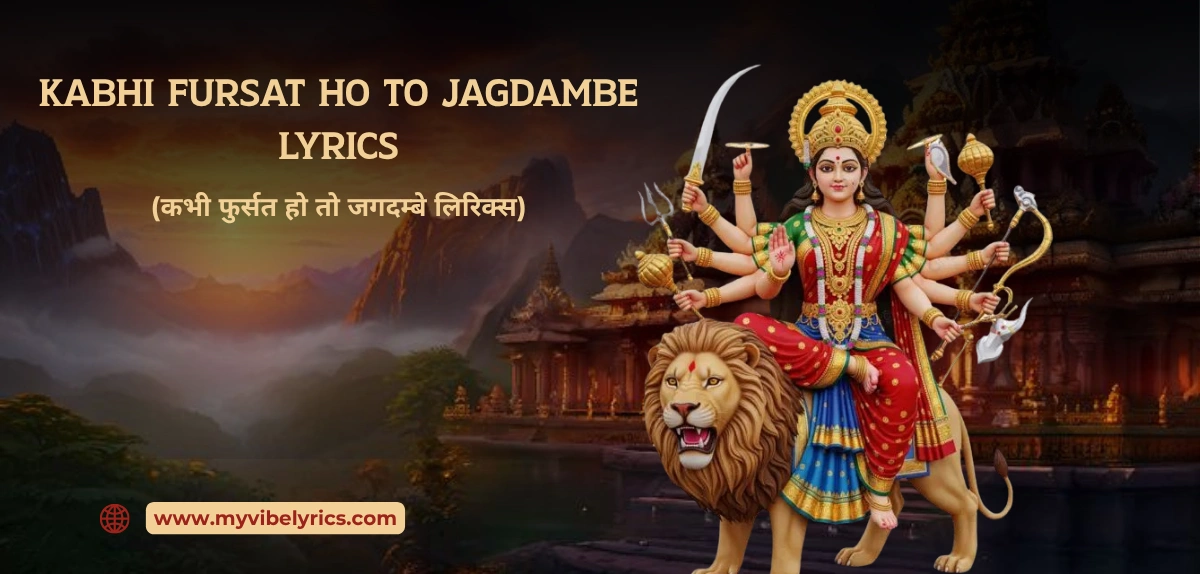
Kabhi Fursat Ho To Jagdambe Lyrics capture raw devotion in its purest form. This bhajan speaks straight to the soul of anyone who has ever felt limited by circumstances yet yearned for divine presence. Singer, composer, and lyricist Shelly Khatri Taluja released this moving track in March 2026 as a single dedicated to Maa Jagdambe. It quickly gained traction during Navratri for its emotional depth and simplicity.
A devotional bhajan where a poor devotee humbly invites the Goddess to his modest home, offering whatever little he has with pure faith. Full Hindi lyrics, Roman transliteration, and English translation below, plus why the words hit so hard.
Overview: About Kabhi Fursat Ho To Jagdambe Lyrics
| Aspect | Details |
|---|---|
| Song Title | Kabhi Fursat Ho To Jagdambe |
| Singer | Shelly Khatri Taluja |
| Composer | Shelly Khatri Taluja |
| Lyricist | Shelly Khatri Taluja |
| Album/Single | Kabhi Fursat Ho To Jagdambe (Single, 2026) |
| Genre | Devotional Bhajan / Mata Bhajan |
This track belongs to the rich tradition of Hindu devotional music focused on Shakti and Maa Durga in her form as Jagdambe. It stands out for its relatable narrative no grand temples or lavish offerings, just sincere love from a humble heart.
Disclaimer:
These lyrics belong to the original artist Shelly Khatri Taluja. They are shared here solely for appreciation and educational purposes. Please support the artist by streaming the official track on Spotify, JioSaavn, YouTube Music, or other platforms.
कभी फुर्सत हो तो जगदम्बे लिरिक्स इन हिंदी
कभी फुर्सत हो तो जगदम्बे, निर्धन के घर भी आ जाना
जो रूखा सूखा दिया हमें, कभी उस का भोग लगा जाना
कभी फुर्सत हो तो जगदम्बे, निर्धन के घर भी आ जाना
जो रूखा सूखा दिया हमें, कभी उस का भोग लगा जाना
ना छत्र बना सका सोने का, ना चुनरी घर मेरे टारों जड़ी
ना पेडे बर्फी मेवा है माँ, बस श्रद्धा है नैन बिछाए खड़े
इस श्रद्धा की रख लो लाज हे माँ, इस विनती को ना ठुकरा जाना
जो रूखा सूखा दिया हमें, कभी उस का भोग लगा जाना
जिस घर के दिए मे तेल नहीं, वहां जोत जगाओं कैसे
मेरा खुद ही बिशोना डरती माँ, तेरी चोंकी लगाऊं मै कैसे
जहाँ मै बैठा वही बैठ के माँ, बच्चों का दिल बहला जाना
जो रूखा सूखा दिया हमें, कभी उस का भोग लगा जाना
तू भाग्य बनाने वाली है, माँ मै तकदीर का मारा हूँ
हे दाती संभाल भिकारी को, आखिर तेरी आँख का तारा हूँ
मै दोषी तू निर्दोष है माँ, मेरे दोषों को तूं भुला जाना
जो रूखा सूखा दिया हमें, कभी उस का भोग लगा जाना
कभी फुर्सत हो तो जगदम्बे, निर्धन के घर भी आ जाना
जो रूखा सूखा दिया हमें, कभी उस का भोग लगा जाना
Kabhi Fursat Ho To Jagdambe Lyrics In English Transliteration
Kabhi fursat ho to Jagdambe, nirdhan ke ghar bhi aa jaana
Jo rookha sookha diya hamein, kabhi us ka bhog laga jaana
Kabhi fursat ho to Jagdambe, nirdhan ke ghar bhi aa jaana
Jo rookha sookha diya hamein, kabhi us ka bhog laga jaana
Na chhatr bana saka sone ka, na chunri ghar mere taaron jadi
Na pede barfi mewa hai Maa, bas shraddha hai nain bichhaaye khade
Iss shraddha ki rakh lo laaj he Maa, iss vinati ko na thukra jaana
Jo rookha sookha diya hamein, kabhi us ka bhog laga jaana
Jis ghar ke diye mein tel nahi, wahaan jot jagaun kaise
Mera khud hi bichhauna darati Maa, teri chonki lagaaun main kaise
Jahaan main baitha wahi baith ke Maa, bachchon ka dil bahla jaana
Jo rookha sookha diya hamein, kabhi us ka bhog laga jaana
Tu bhaagya banaane waali hai, Maa main takdeer ka maara hoon
He daati sambhaal bhikaari ko, aakhir teri aankh ka taara hoon
Main doshi tu nirdosh hai Maa, mere doshon ko tu bhula jaana
Jo rookha sookha diya hamein, kabhi us ka bhog laga jaana
Kabhi fursat ho to Jagdambe, nirdhan ke ghar bhi aa jaana
Jo rookha sookha diya hamein, kabhi us ka bhog laga jaana
Kabhi Fursat Ho To Jagdambe Lyrics In English Translation
Whenever you have some free time, O Jagdambe, please visit even this poor man’s house.
Whatever dry and simple food we have, accept it as your offering sometime.
Whenever you have some free time, O Jagdambe, please visit even this poor man’s house.
Whatever dry and simple food we have, accept it as your offering sometime.
I could not make a golden umbrella, nor a star-studded veil for your home.
There are no sweets, dry fruits or delicacies, Mother only devotion stands with eyes lowered in waiting.
Please honor this devotion, O Mother, do not reject this prayer.
Whatever dry and simple food we have, accept it as your offering sometime.
In this house where the lamp has no oil, how shall I light your lamp?
I myself tremble while spreading my own bedding, Mother how can I prepare your seat?
Wherever I sit, please sit there too, Mother, and cheer the hearts of the children.
Whatever dry and simple food we have, accept it as your offering sometime.
You are the one who creates destiny, Mother, while I am struck by fate.
O giver, protect this beggar, after all I am the apple of your eye.
I am faulty, you are faultless, Mother please forget my faults.
Whatever dry and simple food we have, accept it as your offering sometime.
Whenever you have some free time, O Jagdambe, please visit even this poor man’s house.
Whatever dry and simple food we have, accept it as your offering sometime.
Why These Words Create Such Powerful Impact
The lyrics work because they flip traditional bhajan expectations. Instead of praising the Goddess with grand metaphors alone, they present human vulnerability and material poverty alongside unwavering faith. This contrast makes the plea incredibly moving.
Lines like “bas shraddha hai nain bichhaaye khade” (only devotion stands with eyes lowered) highlight that true offering lies in sincerity, not wealth. In a world obsessed with external success, this message feels refreshing and grounding. The repeated chorus acts like a gentle, persistent knock on the divine door polite yet deeply hopeful.
The song addresses real human struggles: poverty, self-doubt, fear of inadequacy, and the weight of past mistakes. Yet it ends on trust that the Mother sees beyond flaws. This emotional honesty explains why versions of this bhajan resonate across generations.
Pros of this bhajan style:
- Highly relatable for everyday devotees
- Easy to sing along, even for beginners
- Strong emotional connection through humility
Cons / Trade-offs:
- Simpler melody may not suit those seeking complex classical ragas
- Focus on poverty theme might feel heavy for some celebratory occasions
Warning: Approach the lyrics with genuine intent. Devotional songs like this carry cultural and spiritual weight singing them casually without understanding the emotion can dilute their power.
Musical Composition and Vocal Performance
Shelly Khatri Taluja delivers the track with warm, heartfelt vocals that convey both longing and quiet confidence. The production keeps arrangements minimal supporting dholak or light percussion and harmonious backing to let the words shine. This restraint mirrors the song’s theme perfectly: less is more when devotion is central.
? FAQs About Kabhi Fursat Ho To Jagdambe Lyrics
What is the main theme of Kabhi Fursat Ho To Jagdambe?
It’s a humble invitation to Maa Jagdambe from a poor devotee who offers only his pure faith and simple sustenance.
Who sang the 2026 version of this bhajan?
Shelly Khatri Taluja composed, wrote, and sang the popular recent release.
Is this song suitable for Navratri?
Yes. Its focus on Maa Jagdambe makes it ideal for Durga worship during the festival.
What does rookha sookha mean in the lyrics?
It refers to plain, dry, or simple food without richness symbolizing whatever modest means one has.
How can I use these lyrics in daily practice?
Sing or recite them during evening prayers or when facing difficulties. Focus on the feeling of surrender rather than perfect pronunciation.
📝 🎵 If You Liked The Lyrics Of This Song, Be Sure To Check Out These Lyrics As Well:
- Surya Chalisa Lyrics
- लेडीज कीर्तन भजन लिरिक्स
- Thali Bhar Ke Layi Re Khichdo Lyrics
- Wo Shahre Mohabbat Jahan Mustafa Hai Lyrics
- Chandrachooda Shiva Shankara Lyrics
- Vrindavan Me Hukum Chale Barsane Wali Ka Lyrics
- Kya Bataun Ke Kya Madina Hai Lyrics
- Sab Kuch Sarkar Tumhi Se Hai Lyrics
- Tulsi Vivah Mangalashtak
- Kaal Bhairav Ashtakam Lyrics in Hindi
- Aditya Hridaya Stotra Lyrics
- Shiv Tandav Stotram Lyrics in English
- Pranamya Shirasa Devam Lyrics
- Shri Swami Samarth Aarti Lyrics
- Durga Saptashloki Lyrics in Tamil
- Aigiri Nandini Lyrics In Sanskrit
- Teri Murli Ki Dhun Sunne Lyrics
- Hara Hu Baba Par Tujhpe Bharosa Hai Lyrics
- Rama Rama Ratte Ratte Biti Re Umariya Lyrics