

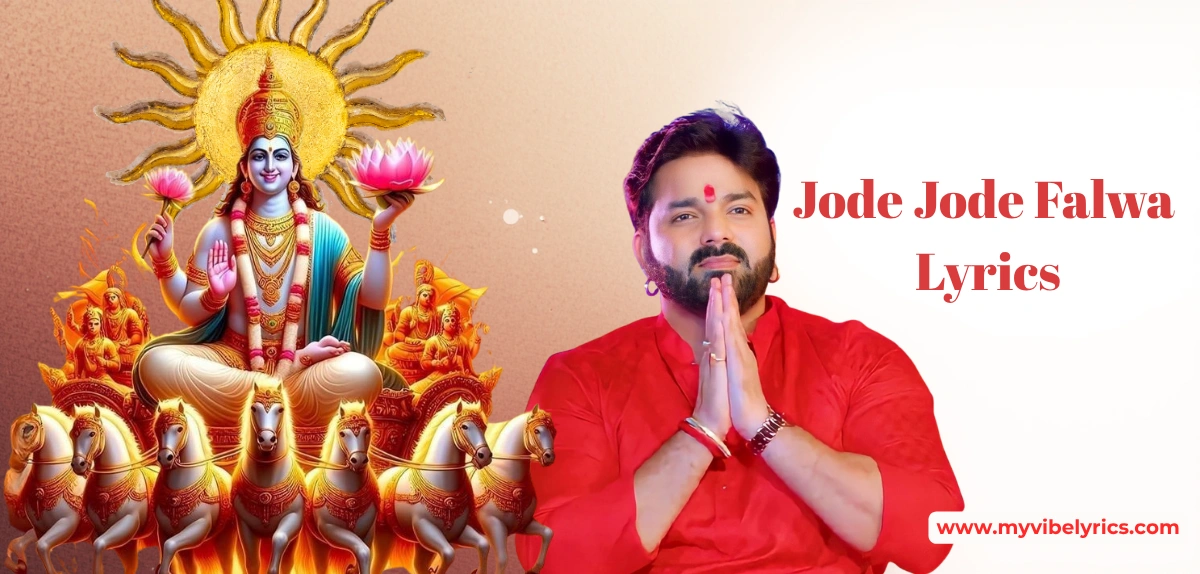
If you have looked up Jode Jode Falwa lyrics before, you already sense that this geet sits apart from typical Chhath celebrations. It does not open with festive percussion or triumphant chorus lines. It opens quietly a devotee standing waist-deep in a river, presenting offerings in pairs, asking a single aching question: when will you appear?
That restraint is its greatest strength.
Pawan Singh the dominant voice of Bhojpuri devotional music brings measured warmth rather than theatrical power to every line. His co-singer Palak adds a daughter’s tenderness that gives the final verse its emotional weight. Together, Pawan Singh Jode Jode Falwa has become one of the most searched Chhath geets every October–November season.
Lyricist Vinay Bihari does something most devotional writers avoid: he names himself in the song’s closing verse “Vinay Bihari likhle maai ke bhajanawa” not out of vanity, but as an act of devotional accountability. He is signing his prayer. That one choice roots the entire song in lived human faith rather than generic piety.
Overview: Song Details at a Glance
| Detail | Information |
|---|---|
| Song Title | Jode Jode Falwa Suruj Dev |
| Singer(s) | Pawan Singh, Palak |
| Lyricist | Vinay Bihari |
| Music | Ajeet Singh & Anjani Ramagya |
| Album | Daras Dekhava Ae Deenanath |
| Music Label | T-Series Bhakti Sagar |
| Genre | Chhath Geet (Bhojpuri Devotional) |
| Language | Bhojpuri |
Disclaimer
The lyrics of Jode Jode Falwa Suruj Dev belong to their original rights holders Pawan Singh, Palak, lyricist Vinay Bihari, composers Ajeet Singh & Anjani Ramagya, and T-Series Bhakti Sagar. These lyrics are presented solely for devotional appreciation and educational purposes. Please support the artists by streaming the original track on music platforms.
Jode Jode Falwa Suruj Dev Lyrics in Hindi
(जोड़े जोड़े फलवा लिरिक्स Complete)
[Mukhda]
जोड़े-जोड़े फलवा सुरुज देव
घटवा पे तिवाई चढ़ावेले हो
जोड़े-जोड़े फलवा सुरुज देव
घटवा पे तिवाई चढ़ावेले हो
जल बीच खड़ा होइ दर्शन ला
आसरा लगावेले हो
जल बीच खड़ा होइ दर्शन ला
आसरा लगावेले हो
[Antara 1]
शीतली बयरिया शीतल दूजे पनिया
कब देब देवता तू आके दर्शनिया
हाँ.. शीतली बयरिया शीतल दूजे पनिया
कब देब देवता तू आके दर्शनिया
जोड़े-जोड़े सूपवा आदित देव
घटवा पे तिवाई चढ़ावेले हो
जल बीच खड़ा होइ दर्शन ला
आसरा लगावेले हो
जल बीच खड़ा होइ दर्शन ला
आसरा लगावेले हो
[Antara 2]
भुखली शरीरिया सजल शुभे मनवा
पुरुबे लागल बड़ुवे सबके ध्यनवा
हाँ.. भुखली शरीरिया सजल शुभे मनवा
पुरुबे लागल बड़ुवे सबके ध्यनवा
जोड़े-जोड़े दउरा ऐ दीनानाथ
घटवा पे तिवाई चढ़ावेले हो
जल बीच खड़ा होइ दर्शन ला
आसरा लगावेले हो
जल बीच खड़ा होइ दर्शन ला
आसरा लगावेले हो
[Antara 3]
विनय बिहारी लिखले माई के भजनवा
गावेली पलक बेटी धई के ध्यनवा
विनय बिहारी लिखले माई के भजनवा
गावेली पलक बेटी धई के ध्यनवा
जोड़े-जोड़े पियरी ऐ गंगा मईया
घटवा पे तिवाई चढ़ावेले हो
जल बीच खड़ा होइ दर्शन ला
आसरा लगावेले हो
जल बीच खड़ा होइ दर्शन ला
आसरा लगावेले हो
Jode Jode Falwa Suruj Dev Lyrics in English Transliteration
(Roman script for those searching Pawan Singh Jode Jode Falwa lyrics in English)
[Mukhda]
Jode jode phalwa suruj dev
Ghatwa pe tiwai chadhawele ho
Jode jode Falwa suruj dev
Ghatwa pe tiwai chadhawele ho
Jal beech khada hoi darshan la
Aasra lagawele ho
Jal beech khada hoi darshan la
Aasra lagawele ho
[Antara 1]
Sheetali bayriya sheetal duje paniya
Kab deb devta tu aake darshaniya
Haan.. sheetali bayriya sheetal duje paniya
Kab deb devta tu aake darshaniya
Jode jode supawa aadit dev
Ghatwa pe tiwai chadhawele ho
Jal beech khada hoi darshan la
Aasra lagawele ho
Jal beech khada hoi darshan la
Aasra lagawele ho
[Antara 2]
Bhukhali shaririya sajal shubhe manva
Purube lagal baduve sabke dhyanva
Haan.. bhukhali shaririya sajal shubhe manva
Purube lagal baduve sabke dhyanva
Jode jode dawara ae dinanath
Ghatwa pe tiwai chadhawele ho
Jal beech khada hoi darshan la
Aasra lagawele ho
Jal beech khada hoi darshan la
Aasra lagawele ho
[Antara 3]
Vinay bihari likhle maai ke bhajanawa
Gaveli palak beti dhai ke dhyanva
Vinay bihari likhle maai ke bhajanawa
Gaveli palak beti dhai ke dhyanva
Jode jode piyari ae ganga maiya
Ghatwa pe tiwai chadhawele ho
Jal beech khada hoi darshan la
Aasra lagawele ho
Jal beech khada hoi darshan la
Aasra lagawele ho
Jode Jode Falwa Lyrics English Translation: Verse by Verse
Mukhda The Opening Offering
“Pairs of fruits are being offered, O Sun God / The lamp is being lit upon the ghat / Standing in the water for your glimpse / Placing all hope in you”
The word “jode jode” (in pairs) is deliberate. Chhath offerings are always made in twos two fruits, two lamps, two bamboo baskets because pairs represent completeness in Hindu ritual. The devotee standing in the river is not performing a routine. She is staking her hunger, her body, and her hope on one moment of divine sight.
Antara 1 The Question Only a Devotee Can Ask
“The breeze is cool, the water is cool too / When will you come, O God, and grant your darshan? / Pairs of winnowing fans are offered, O Aditya Dev”
“Kab deb devta tu aake darshaniya?” When will you give your darshan? is the emotional center of the entire song. It is not a demand. It is the question of someone whose patience itself has become devotion. The cool wind and cool water contrast sharply with the inner fire of longing. Very few devotional writers capture that tension this cleanly.
Antara 2 The Body Fasting, the Mind Radiant
“The body is fasting, yet the mind is adorned with auspiciousness / All eyes are turned eastward, focused in deep meditation / Pairs of baskets are offered, O Dinanath (Lord of the Poor)”
This is the verse Chhath devotees identify with most personally. The Chhath fast (nirjala vrat) runs 36 hours without food or water. The body weakens but tradition holds that the mind must stay sajal (decorated, joyful, firm). That paradox of physical hunger alongside spiritual radiance is the emotional core of the festival, compressed into two lines.
The address to the Sun as “Dinanath” (Lord of the destitute) is significant. It insists this god belongs to everyone the poor farmer and the wealthy householder standing side by side on the same ghat.
Antara 3 The Signature Verse
“Vinay Bihari has written this bhajan for the Mother / Palak, like a daughter, sings it holding deep devotion / Pairs of yellow cloth are offered, O Ganga Maiya”
The yellow cloth (piyari) in the closing verse is the offering made to Ganga rivers are sacred intermediaries in Chhath, carrying prayers from the ghat to the divine. Singer Palak is cast as the beti (daughter) offering this geet to the divine mother a mirror of every devotee standing at the water’s edge. It is a layered, carefully constructed piece of writing.
Musical Composition and Vocal Performance
Music directors Ajeet Singh and Anjani Ramagya make consistently smart choices here. They resist the temptation to layer heavy production over an intimate devotional text.
| Element | Approach |
|---|---|
| Instrumentation | Folk instruments dhol, harmonium, light chorus |
| Production Style | Sparse, warm, close-mic’d vocals |
| Pawan Singh’s tone | Restrained, aching not theatrical |
| Palak’s role | Softer, younger voice creating generational texture |
| Overall feel | Communal yet deeply personal |
Pawan Singh’s vocal approach here differs sharply from his festive Chhath hits. He pulls back the power he uses in celebration songs and holds a sustained, quiet longing particularly in the refrain line “aasra lagawele ho” (placing all hope in you). That choice reflects real understanding of the ritual context: you do not shout at a god you are quietly beseeching.
The album Daras Dekhava Ae Deenanath, released under T-Series Bhakti Sagar, maintains this aesthetic consistency throughout, making it one of the more carefully crafted Chhath albums in the Bhojpuri catalogue.
What Makes This Song Different from Other Chhath Geets
Most Chhath geets split into two types: jubilant celebration (Kelwa Ke Paat Par, Kahawa Se Aile) or solemn supplication. जोड़े जोड़े फलवा occupies a rare third space it holds both at once.
The offerings themselves are celebratory (paired fruits, winnowing fans, baskets, yellow cloth). The emotional register is yearning. That duality mirrors the actual psychological state of a Chhath devotee at sandhya arghya (sunset offering) simultaneously grateful and aching, joyful in faith yet physically drained.
Very few Chhath songs sustain that dual state across every verse. This one does.
? FAQs About Jode Jode Falwa Lyrics
Q: Who sang Jode Jode Falwa?
Pawan Singh and Palak, released under T-Series Bhakti Sagar.
Q: Who wrote Jode Jode Falwa lyrics?
Vinay Bihari.
Q: What does “Jode Jode Falwa” mean?
“Jode jode” = in pairs; “phalwa/falwa” = fruits. It refers to offering fruits in pairs to Suruj Dev during Chhath Puja.
Q: Which album is this song from?
Daras Dekhava Ae Deenanath by Pawan Singh.
Q: Who is Suruj Dev?
The Sun God, worshipped during Chhath Puja. Called Aditya, Dinanath, or Suruj Dev in Bhojpuri tradition.
Q: What language is this song in?
Bhojpuri the primary language of Chhath geets, spoken across Bihar, eastern UP, and Jharkhand.
Q: What is “Dinanath” in the song?
A name for the Sun God meaning “Lord of the Poor/Destitute” emphasising that Suruj Dev belongs to everyone.

 If You Liked The Lyrics Of This Song, Be Sure To Check Out These Lyrics As Well:
- Kaal Bhairav Ashtakam Lyrics in Hindi
- Aditya Hridaya Stotra Lyrics
- Shiv Tandav Stotram Lyrics in English
- Pranamya Shirasa Devam Lyrics
- Shri Swami Samarth Aarti Lyrics
- Durga Saptashloki Lyrics in Tamil
- Aigiri Nandini Lyrics In Sanskrit
- Teri Murli Ki Dhun Sunne Lyrics
- Hara Hu Baba Par Tujhpe Bharosa Hai Lyrics
- Rama Rama Ratte Ratte Biti Re Umariya Lyrics
- Kabhi Fursat Ho To Jagdambe Lyrics
- Om Voices Ya Devi Sarvabhuteshu Lyrics
- Karunamayi Kripa Kijiye Lyrics