

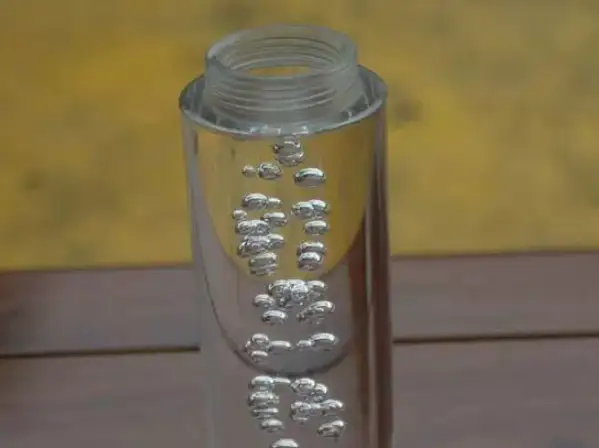
In the high-stakes world of plastic manufacturing, air bubbles are more than just an aesthetic annoyance; they are a signal of process instability that can compromise a part’s structural integrity.
To solve the problem of “bubbles,” one must first distinguish between two very different defects that look identical to the naked eye: Trapped Air and Vacuum Voids.
This guide explores the mechanical, thermal, and design-related causes of these defects and provides actionable solutions to eliminate them.
1. Identifying the Culprit: The “Heat Test”
Before adjusting machine settings, you must determine if the bubble contains actual air or is simply an empty space.
- The Test: Gently heat the area with a heat gun.
- The Result: If the bubble expands, it is trapped gas (Air Trap). If the bubble collapses, it is a vacuum void caused by shrinkage.
2. Causes and Solutions for Trapped Air
Trapped air occurs when the molten plastic encapsulates gas before it can escape the mold cavity.
A. Inadequate Venting
The most common cause of bubbles is a lack of “breathing” room in the mold. As plastic enters, the air already inside must go somewhere. If it can’t escape through the parting lines or vent pins, it is compressed into the melt.
- Solution: Inspect and clean existing vents to remove “plate-out” (residue). If the problem persists, add or enlarge venting slots (typically 0.02mm to 0.04mm deep for most plastics) at the last point of fill.
B. Moisture in the Resin
If plastic pellets are not dried properly, the moisture turns into steam inside the heated barrel. This steam travels into the mold, creating silver streaks (splay) or internal bubbles.
- Solution: Ensure materials are dried according to the manufacturer’s spec (usually below 0.02% moisture). Check the hopper dryer’s temperature and desiccant status.
C. Turbulence and Injection Speed
Shooting plastic into the mold too quickly can cause “jetting” or turbulent flow, which whips air into the polymer like a whisk beating an egg.
- Solution: Use decoupled molding techniques. Start with a slower injection speed to allow a stable flow front to form, only increasing speed once the gate is cleared.
3. Causes and Solutions for Vacuum Voids
Unlike air traps, vacuum voids contain no gas. They occur in thick sections of a part where the outer “skin” freezes first, and the cooling inner core pulls away from itself as it shrinks.
A. Insufficient Holding Pressure
If the machine stops pushing plastic into the mold too early, there isn’t enough material to compensate for the natural shrinkage that occurs during cooling.
- Solution: Increase the packing/holding pressure and extend the hold time. Ensure the “gate freeze” has occurred before the pressure is released.
B. Thick Wall Sections
Parts with non-uniform wall thickness are prone to voids. The thickest areas stay hot the longest, acting as a “heat sink” that pulls material away from the center.
- Solution: Follow Design for Manufacturing (DFM) principles. Aim for uniform wall thickness. If a section must be thick, use ribs or bosses instead of a solid block of plastic to maintain structural strength without the mass.
4. Troubleshooting Checklist by Process Parameter
If you are standing at the machine and see bubbles, follow this sequence of adjustments:
Parameter
Action for Trapped Air
Action for Vacuum Voids
Injection Speed
Decrease (Reduce turbulence)
Decrease (Allow better packing)
Back Pressure
Increase (Expel air from barrel)
Increase (Ensure melt density)
Melt Temperature
Decrease (Prevent degradation)
Increase (Delay skin freezing)
Mold Temperature
Increase (Help air reach vents)
Decrease (Cool the core faster)
Holding Pressure
N/A
Increase (Force more material in)
5. Summary of Best Practices
Eliminating bubbles is a balancing act between material preparation, mold engineering, and machine fine-tuning.
- Start with the Material: Never mold wet resin.
- Verify the Venting: A mold that cannot breathe will always produce defects.
- Optimize the Gate: Ensure the gate is large enough (usually at least 50% of the wall thickness) to allow packing pressure to reach the center of the part before the plastic solidifies.
By systematically applying the heat test and adjusting parameters based on the specific defect type, manufacturers can significantly reduce scrap rates and ensure high-quality, high-strength molded components.
