

The timeless mantra “Sarve Bhavantu Sukhinah” resonates with profound spiritual depth, originating from the Brihadaranyaka Upanishad. This ancient invocation, often rendered as a devotional song, serves as a universal prayer for peace, health, and happiness. In its musical adaptations, it evokes a serene emotional tone of hope and unity, transcending individual suffering to embrace collective well-being. The message is one of boundless compassion, urging listeners to envision a world free from illness and sorrow, filled with auspicious sights and shared joy. Through vivid imagery of harmony and auspiciousness, the lyrics amplify the song’s impact as a beacon of spirituality, fostering inner peace and a sense of interconnectedness that uplifts the soul.
Overview: About “Sarve Bhavantu Sukhinah Mantra”
| Aspect | Details |
|---|---|
| Song Title | Sarve Bhavantu Sukhinah |
| Singer | Amrita Chaturvedi |
| Composer | Rohit Kumar (Bobby) |
| Lyricist | Traditional (Brihadaranyaka Upanishad) |
| Album | Vedic Shanti Mantra |
| Genre | Devotional / Spiritual |
This rendition brings the ancient mantra to life in a modern devotional context, without ties to any specific movie.
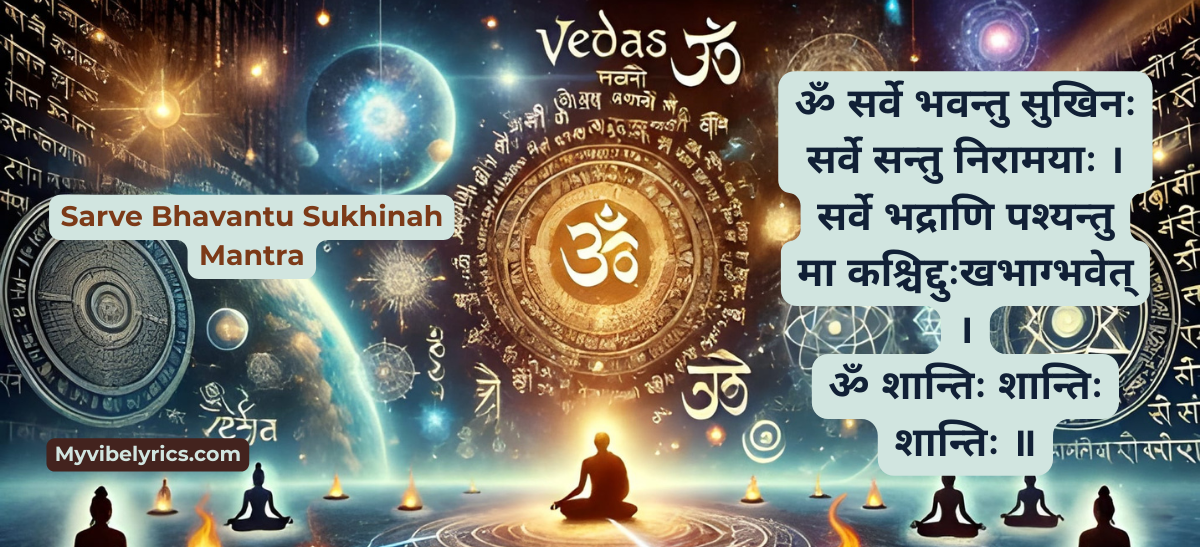
Sarve Bhavantu Sukhinah Lyrics in Sanskrit
ॐ सर्वे भवन्तु सुखिनः
सर्वे सन्तु निरामयाः ।
सर्वे भद्राणि पश्यन्तु
मा कश्चिद्दुःखभाग्भवेत् ।
ॐ शान्तिः शान्तिः शान्तिः ॥
Sarve Bhavantu Sukhinah Lyrics in Hindi
सभी सुखी रहें।
सभी निरोग (बीमारियों से मुक्त) रहें।
सभी शुभ (मंगलमय) चीज़ें देखें।
कोई भी दुःखी न हो।
ॐ शान्ति शान्ति शान्ति ॥
Sarve Bhavantu Sukhinah Lyrics in English Transliteration
Om Sarve Bhavantu Sukhinah
Sarve Santu Niraamayaah
Sarve Bhadrani Pashyantu
Maa Kashchid Duhkha Bhaag Bhavet
Om Shaantih Shaantih Shaantih
Sarve Bhavantu Sukhinah Lyrics in English Translation
Om, may all be happy,
May all be free from illness.
May all see what is auspicious,
May no one suffer.
Om peace, peace, peace.
Sarve Bhavantu Sukhinah Lyrics Meaning
The words enhance the song’s spiritual impact by painting a vivid picture of universal harmony. Phrases like “may all be happy” and “may no one suffer” create an inclusive, empathetic narrative that dissolves boundaries, inspiring listeners to cultivate joy and compassion in their lives. This mantra’s repetitive invocation of peace reinforces its transformative power, turning a simple prayer into a profound meditation on collective bliss.
Musical Composition and Vocal Performance
In Amrita Chaturvedi’s rendition, the composition by Rohit Kumar (Bobby) blends traditional Vedic chanting with subtle melodic elements, creating a soothing, meditative soundscape. The arrangement features gentle rhythms and harmonious tones that evoke tranquility, allowing the ancient Sanskrit words to flow like a calming river. Chaturvedi’s vocal performance is ethereal and heartfelt, her clear, resonant voice infusing each syllable with devotion and warmth. This elevates the mantra’s message, making it accessible and emotionally stirring, as if inviting listeners into a sacred space of healing and unity. The overall effect is one of profound serenity, where the music amplifies the lyrics’ spiritual essence, leaving a lasting sense of joy and peace.
Other Lyrics You Might Enjoy :
- Hanuman Chalisa Lyrics
- Shree Sankatmochan Hanuman Ashtak
- Hariharan Bajrang Baan Lyrics
- Shree Ram Stuti Lyrics
- Ram Aayenge Lyrics by Vishal Mishra
Disclaimer:
The lyrics presented here are sourced from traditional Vedic texts, verified through reputable spiritual and cultural resources. This blog post is for educational and inspirational purposes only, respecting the sacred origins of the mantra without any commercial intent.
FAQ: Common Questions About Sarve Bhavantu Sukhinah Shlok
What is the meaning of Sarve Bhavantu Sukhinah?
The mantra translates to a prayer for universal happiness, health, and peace. It wishes for all beings to be happy, free from illness, and to experience auspiciousness without suffering.
What is the origin of Sarve Bhavantu Sukhinah?
It originates from the Brihadaranyaka Upanishad, an ancient Vedic text, and is traditionally chanted as a peace mantra in spiritual practices.
How is the mantra used in modern times?
It is often chanted in yoga sessions, meditation practices, and devotional music to promote peace and unity, as seen in albums like Vedic Shanti Mantra.
Can anyone chant Sarve Bhavantu Sukhinah?
Yes, this universal prayer is meant for everyone, regardless of background, to foster compassion and positivity through its recitation.
Why is the mantra repeated with “Shanti” three times?
The repetition of “Shanti” (peace) three times is a traditional practice to invoke peace in the body, mind, and spirit, or to address disturbances in the physical, mental, and cosmic realms.