

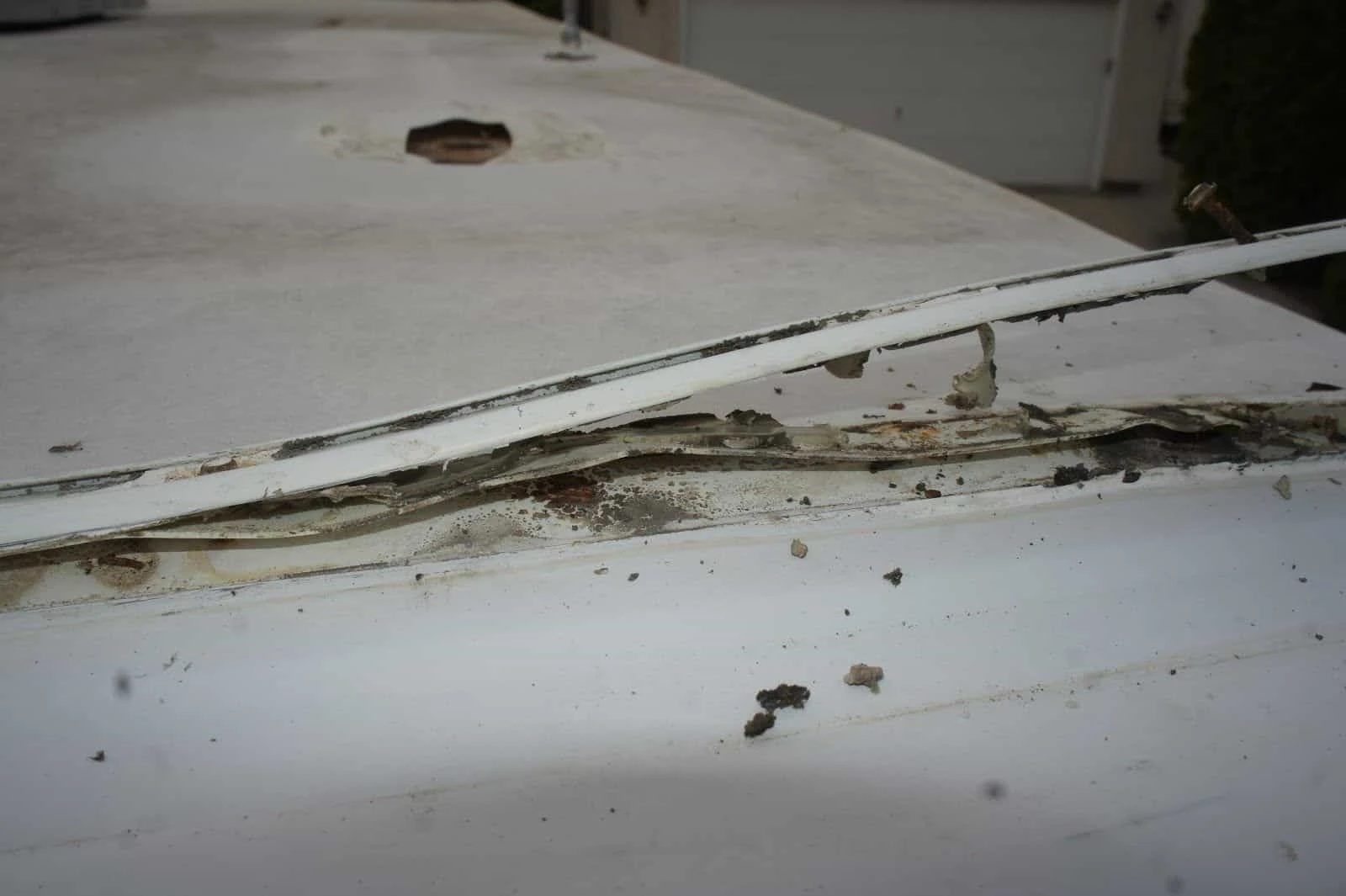
RV water damage repair is one of the most serious and expensive areas of RV ownership. Water behaves differently inside an RV than in a house. It spreads sideways, gets trapped in layers, and stays hidden until damage is already advanced. By the time stains or soft spots appear, the problem is usually structural, not cosmetic.
Many RVs that look fine on the surface are quietly deteriorating underneath because water damage was ignored or repaired incorrectly.
How water damage starts in an RV
Water damage almost never starts in the middle of a wall or floor. It enters from predictable places. Roof seams, vents, skylights, windows, slide-out seals, clearance lights, and edge trim are the most common entry points. Even a tiny failure in sealant allows water to wick into insulation and wood.
Driving vibration makes the problem worse. Every mile flexes the RV, opening microscopic gaps that pull water deeper into the structure.
Why RV water damage spreads so far
RV construction is lightweight. Floors, walls, and roofs are layered systems glued together. Once water gets inside, it travels along insulation, wood framing, and adhesive layers. Gravity is not the main factor. Capillary action is.
This is why water damage often shows up far from where the leak actually started. Fixing only the visible area without finding the source guarantees repeat failure.
Early warning signs owners often miss
Water damage does not always look dramatic at first. Subtle signs are more important than obvious ones. A musty smell, spongy feeling underfoot, wall ripples, loose trim, bubbling vinyl, or doors that no longer align properly are all red flags.
Electrical issues can also be a clue. Corrosion in wiring caused by moisture often shows up as random faults long before visible damage appears.
Inspection comes before any repair
Proper RV water damage repair always starts with inspection. This means checking roof seams, probing for soft areas, measuring moisture levels, and sometimes removing panels to see what’s actually happening inside the structure.
Skipping inspection and going straight to cosmetic fixes is the most common and most expensive mistake. Paint, sealant, or new flooring does not stop active moisture trapped underneath.
What real RV water damage repair involves
Once damage is confirmed, repair usually means removal, not covering. Wet insulation must come out. Damaged wood must be replaced. Wiring exposed to moisture often needs repair or replacement. Only after the structure is dry and solid does rebuilding begin.
This is why water damage repair costs escalate quickly. Labor and disassembly matter far more than materials.
Roof repair alone is often not enough
Many owners fix the roof and assume the problem is solved. Stopping the leak is essential, but it does not reverse damage already done. If water entered walls or floors, repairs must address those areas as well.
A sealed roof with rotting structure underneath is still a failing RV.
Mold and health concerns
Water damage is not only a structural issue. Mold growth inside walls and floors affects air quality and health. Mold problems often appear months after a “repair” that only sealed the outside.
True repair means drying, cleaning, and rebuilding affected areas, not just sealing entry points.
When repair makes sense and when it doesn’t
RV water damage repair can make sense if the damage is localized and caught early. It often does not make financial sense when water has spread through large sections of floor, walls, or slide-outs, especially on lower-value RVs.
An honest assessment is critical. Not every RV should be saved, and recognizing that early prevents sinking money into a losing project.
Why professional RV water damage repair matters
Water damage is where DIY and general repair shops fail most often. Understanding RV construction, moisture behavior, and proper repair sequencing is essential.
Specialists like Custom-way focus on RV water damage repair with a system-level approach. They identify the true source of leaks, assess hidden damage, and repair structure, not just surfaces. This reduces the risk of repeat failures and protects long-term usability.
Situations where professional inspection is critical
Professional inspection is especially important after storms, roof leaks, flood exposure, or when buying a used RV. Many buyers unknowingly purchase RVs with active water damage that was cosmetically hidden for sale.
In these cases, inspection often saves far more money than it costs.
The realistic takeaway
RV water damage repair is not about making an RV look good again. It is about stopping moisture at the source and restoring structural integrity. The earlier damage is caught, the more repair options exist. The longer it is ignored, the fewer choices remain.
In RV ownership, water is the enemy you don’t see until it’s already done its work.